

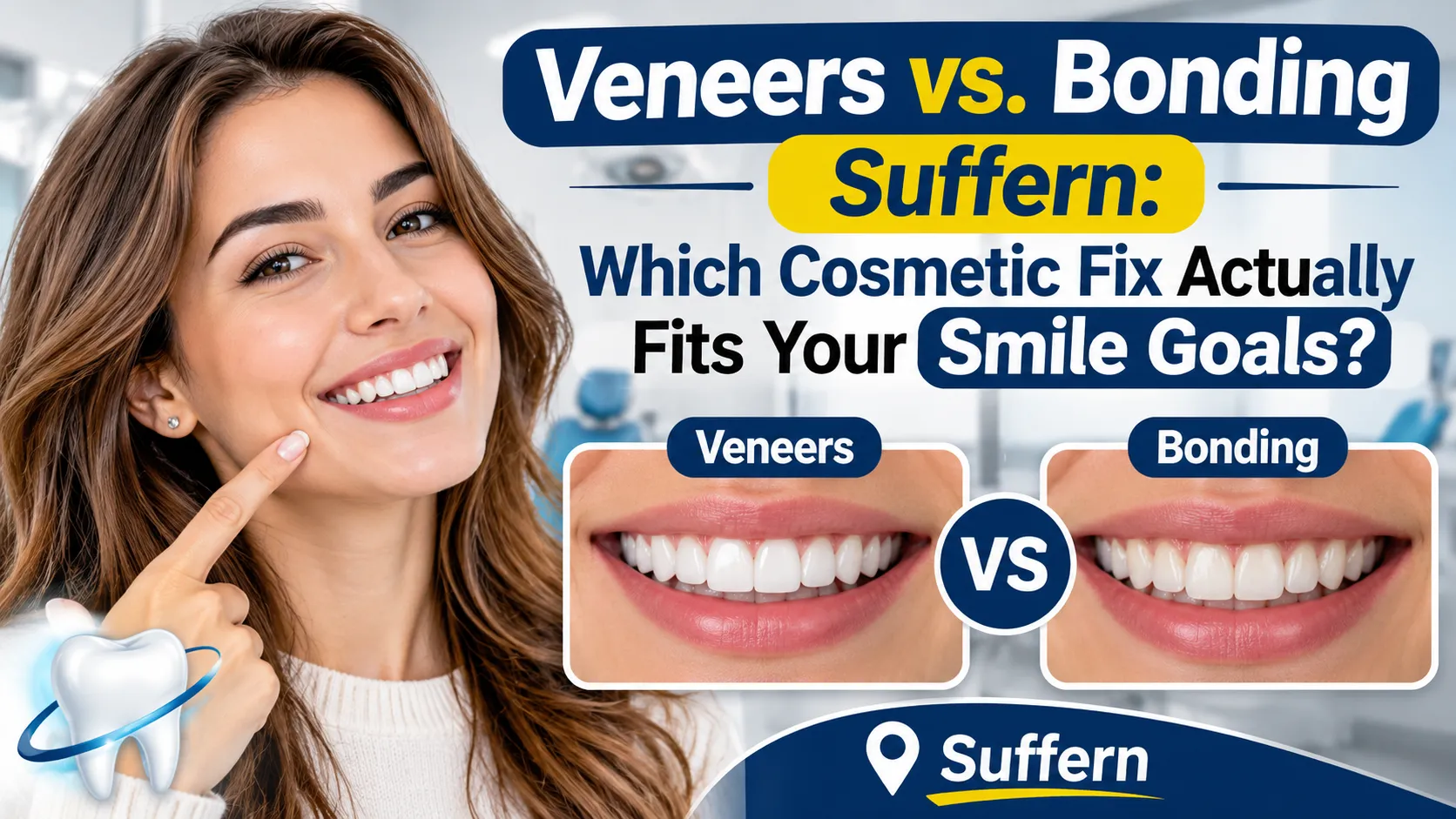
Someone bites into a popcorn kernel wrong. Front tooth chips. Now they’re googling fixes at midnight, torn between two options that sound similar but aren’t.
Or it’s older than that — a gap between the front teeth that’s been there since middle school, and finally, there’s budget to deal with it.
The Veneers vs. Bonding Suffern decision usually comes down to three things nobody explains clearly upfront: budget, timeline, and how much actual tooth structure you’re willing to give up. That last part matters more than most consultations let on.
What Bonding Actually Solves (and Where It Falls Short)
Bonding is fast. A dentist applies tooth-colored resin straight onto the tooth, sculpts it by hand, cures it under UV light. One visit. Often under an hour.
It handles small jobs well — a chipped edge, a minor gap, a stubborn discolored spot that whitening trays never touched. Reshaping work too, the kind where a tooth just looks slightly off in photos and needs rounding out.
Durability is the trade-off, and it’s a real one. Composite resin picks up stains. Coffee does it. Red wine does it faster. Turmeric-heavy cooking, over years, leaves a tint that no amount of brushing reverses. Three to five years in, most bonding needs a redo or at minimum a polish-and-patch.
Cost sits lower — $300 to $600 per tooth in most cases. That number alone pulls a lot of patients toward bonding before they’ve weighed what they’re giving up on the longevity side.
What Veneers Actually Solve (and What They Cost You)
Veneers are porcelain. Thin shells, bonded to the front of the tooth, built to last. But getting there requires shaving down enamel first — usually 0.3 to 0.5mm, just enough to make room for the shell to sit flush.
That enamel doesn’t grow back. Ever. Once it’s gone, that tooth needs a veneer or crown covering it permanently. Most marketing pages conveniently leave this part out.
In return, patients get real staying power. Ten to fifteen years of stain resistance is typical. Multiple veneers placed together also solve uniformity problems bonding can’t touch — matching shape and shade across a whole smile line, not just patching one spot.
Price shows that: $1,000 to $2,500, per tooth more depending on the lab and material grade. A full arch of six to eight veneers can easily reach a five-figure amount.
Patients searching Veneers vs. Bonding Suffern online tend to find surface-level comparisons. Price tables. Stock photos. Rarely anything about what happens when a veneer debonds or cracks in year eight — which isn’t a quick fix, it’s a full redo.
The Overtreatment Problem Nobody Talks About
Here’s a pattern that shows up across cosmetic consults industry-wide, not tied to any single practice: patient walks in with two problem teeth, walks out with a six-veneer treatment plan.
Sometimes that’s genuinely warranted. Often it’s not.
One chipped tooth plus one minor gap doesn’t automatically require six veneers to “balance things out.” Bonding on those two specific teeth solves the actual complaint — at roughly a third of the cost, with none of the permanent enamel loss.
A proper Veneers vs. Bonding Suffern consultation includes a bite analysis. Not just a shade chart held up against your teeth under office lighting. The dentist should be able to walk through each tooth and explain, specifically, why resin won’t hold up there versus why porcelain earns its price tag. If that explanation doesn’t come up on its own, ask for it.
How to Actually Decide Between the Two
A few questions worth sitting with before signing anything:
How many teeth actually need correction? One or two minor flaws point toward bonding. Multiple teeth needing matched color and shape point toward veneers.
What’s your stain exposure, honestly? Heavy coffee or wine drinkers see bonding degrade faster. Veneers hold their color under that kind of daily load.
Can you live with permanent enamel removal? Veneers don’t come with an undo button. Bonding mostly does.
And the ten-year math — not just this year’s invoice. Bonding costs less now but needs replacing more often. Veneers cost more upfront but can work out cheaper per year of use, depending on how long they actually hold.
Dental offices across the region, including practices like Promise Family Dental in the greater New York area, generally walk patients through this exact comparison — photos, radiographs, a physical bite check — before recommending either path. That’s the baseline worth expecting from any consult, regardless of which office you end up choosing.
Finding the best dentist Suffern has to offer comes down to looking past the marketing photos. Ask for documented case histories. Real before-and-after radiographs, not stock imagery pulled off a stock site.
Where Promise Family Dental Fits Into This Decision
For Suffern patients considering veneers versus bonding, Promise Family Dental focuses on diagnosis, not a sales pitch. Treatment options are based on the patient’s needs not, on which procedure is more expensive.
Under Dr. Jacob John consultations usually look at enamel condition bite alignment and realistic longevity numbers for both bonding and veneers. Side by side with trade‑offs spelled out clearly. That kind of exact down‑to‑earth guidance makes the difference, between a consultation and a pitch that pretends to be advice.
For anyone still working through Veneers vs. Bonding Suffern options: get a second opinion before any enamel gets removed. It’s permanent. One conversation about shade shouldn’t be the deciding factor.
Frequently Asked Questions
1. How long does bonding typically last before needing replacement?
Three to five years is the realistic window before staining or chipping forces a touch-up or full redo — sooner if you drink a lot of coffee or wine.
2. Do veneers damage natural teeth?
They require removing a thin layer of enamel, and that’s permanent. The tooth needs a veneer or crown on it from that point forward.
3. Is bonding or veneers better for a single chipped tooth?
For one isolated chip, bonding usually makes more sense — faster, cheaper, no enamel removal for what’s really a minor repair.
4. Can veneers be combined with bonding in one treatment plan?
Often, yes. Veneers go on the most visible front teeth, bonding handles adjacent teeth with smaller flaws — balancing cost against where it actually shows.